Problem statement
In times of emergency situations, whether it’s during a natural or technological disaster, mobility is a major issue. Some mobility issues come in the form of evacuation needs and transferring of disaster relief goods (e.g. water, food, supplies) to affected communities.
After an act of violence such as shootings, demand for transportation is higher than a typical day. This makes it difficult to meet increased customer demand and help people in these situations.
How might Uber utilize mobility as a strength for the local community during times of need?
I. Donor application
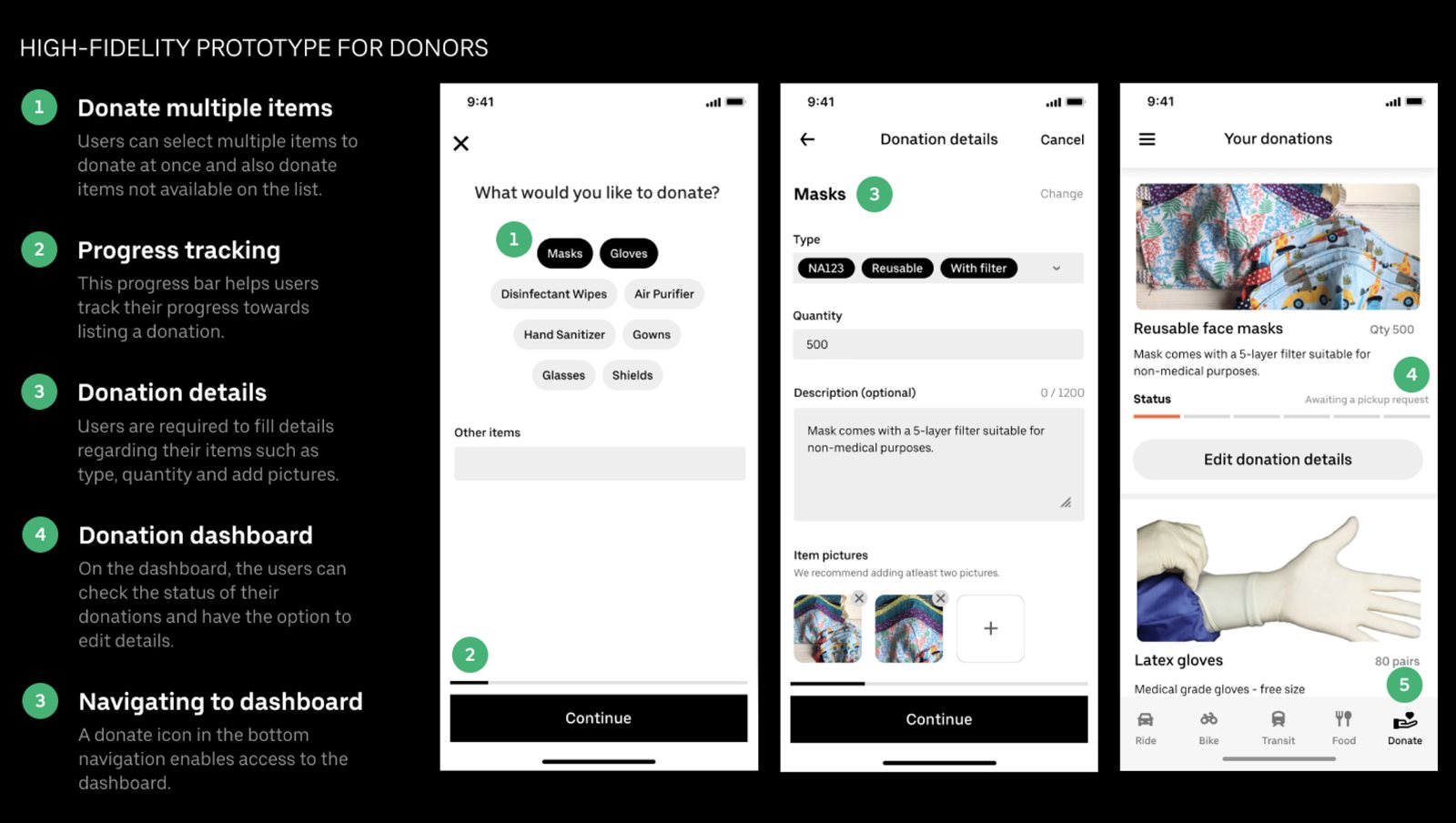
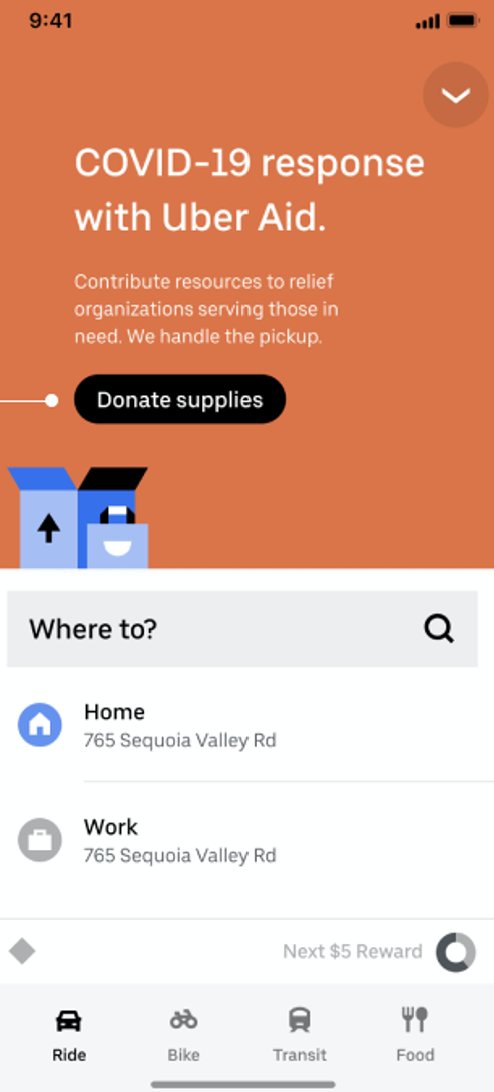
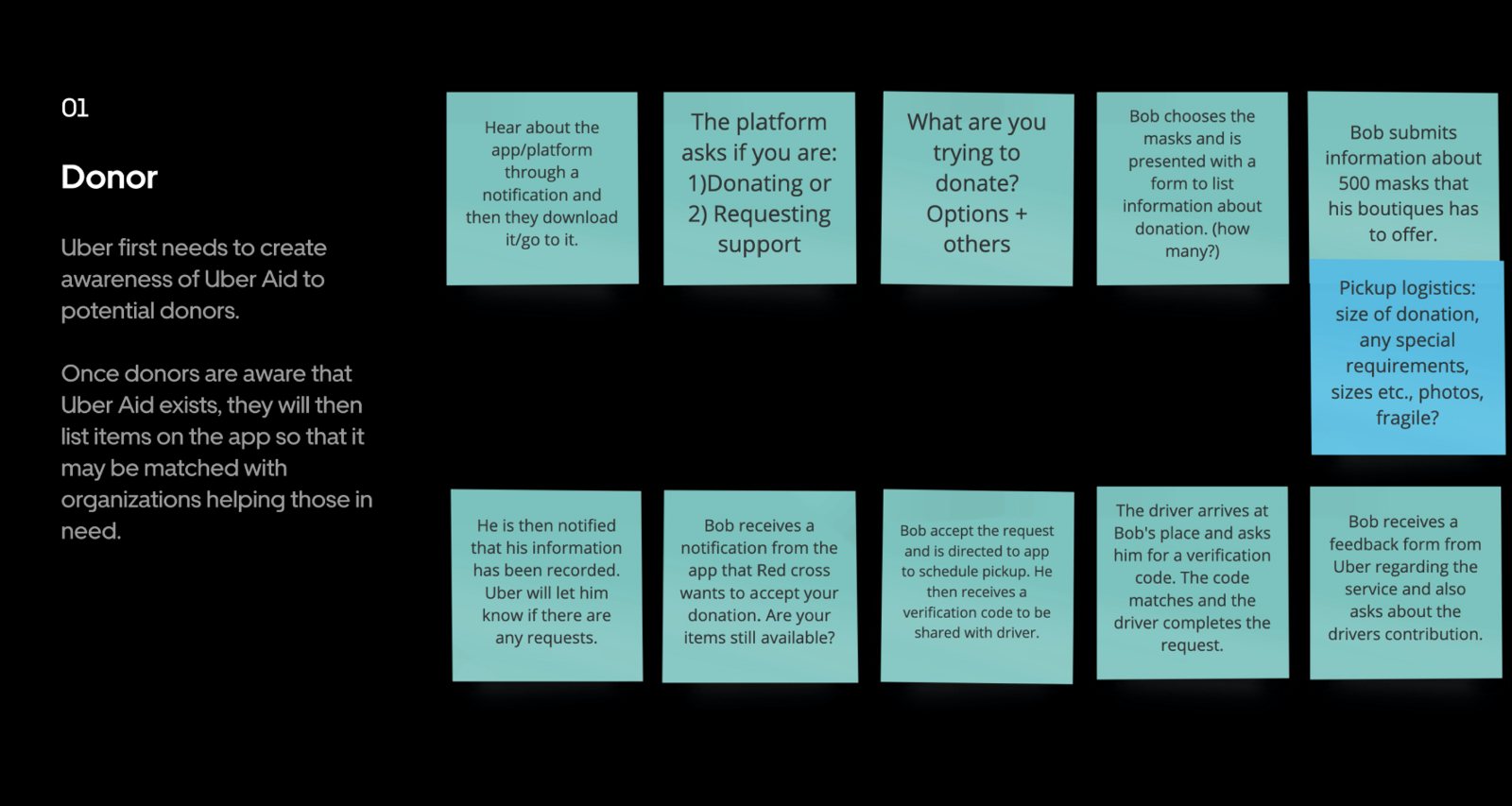
Donors can make a donation during any disaster using the Uber Aid platform. Uber will notify all their existing users about the new Uber Aid platform. Uber will match the listed donations on the platform with the organizations in need.
II. Organization website
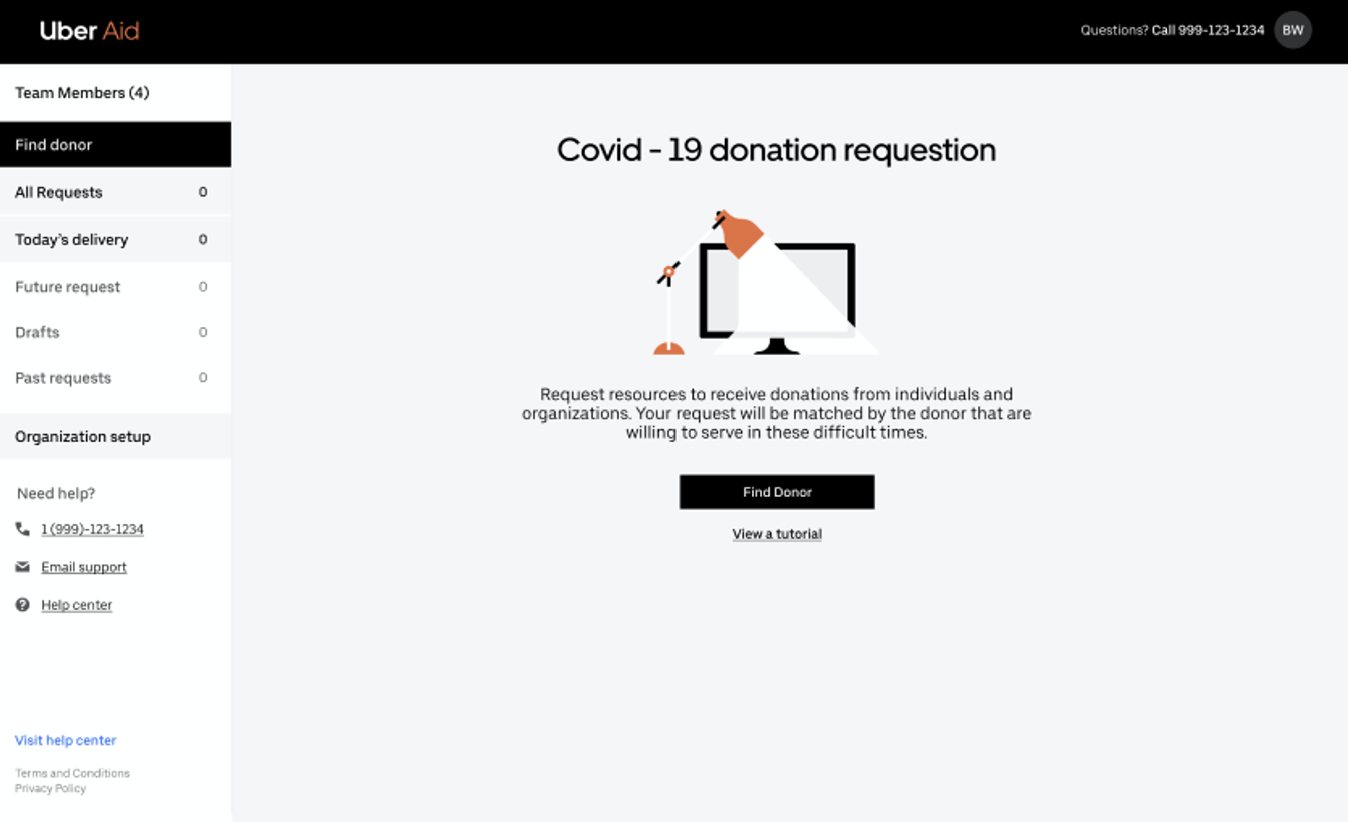
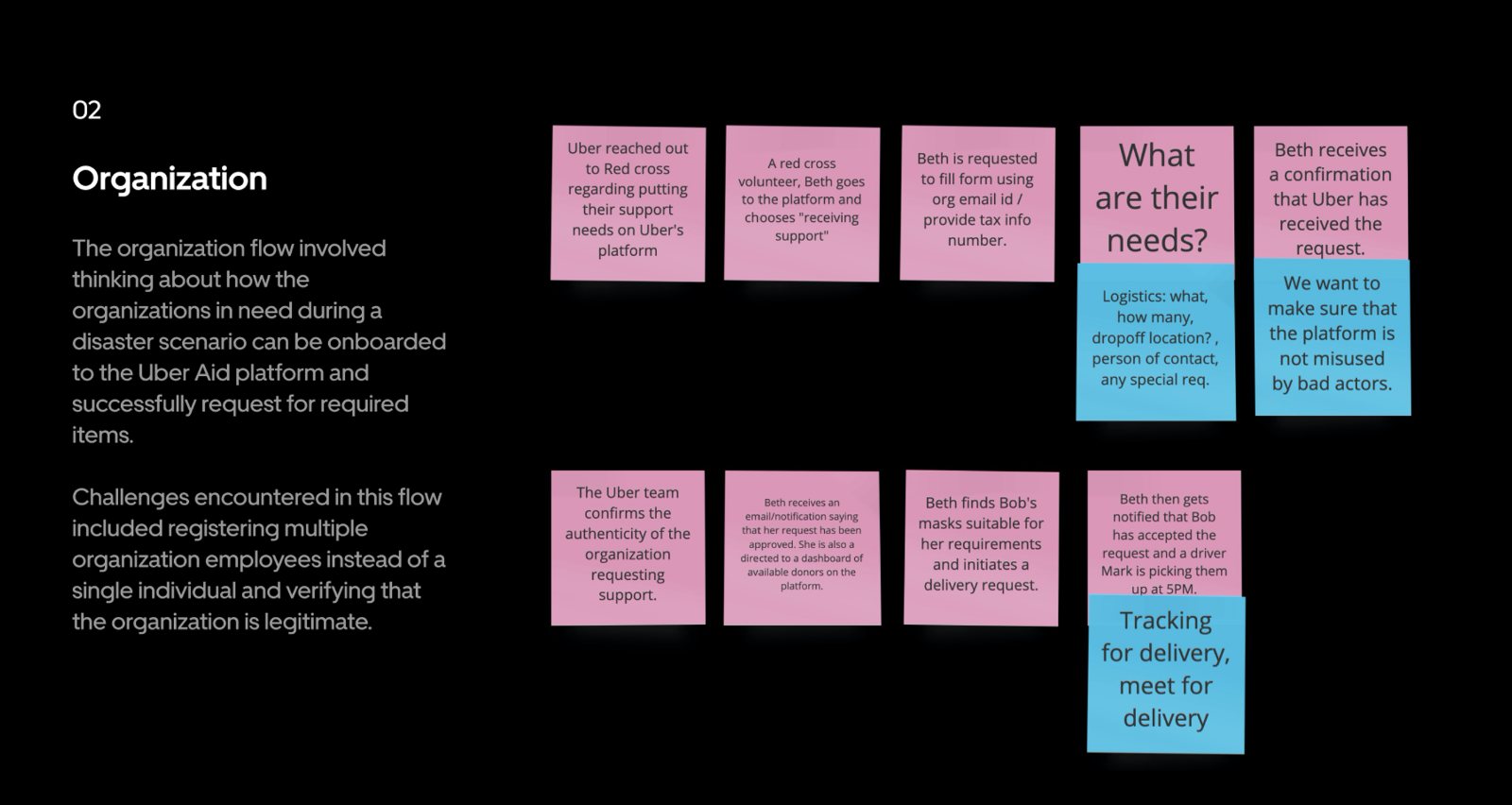
An organization can search for different types of donations depending on the disaster situation. Once they find a suitable match, they can submit a request to the donor to have it delivered at their organization.
III. Driver application
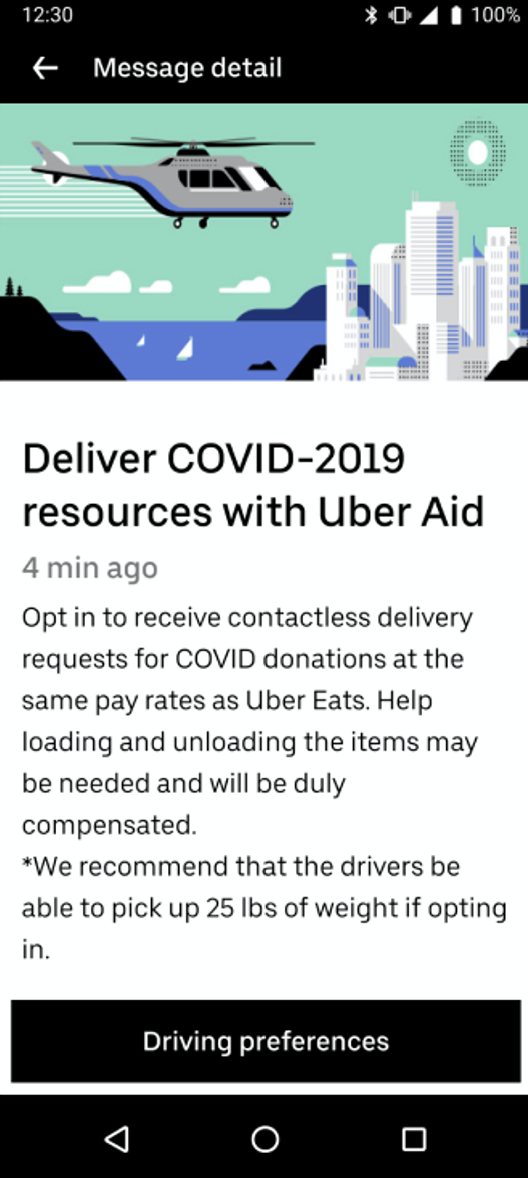
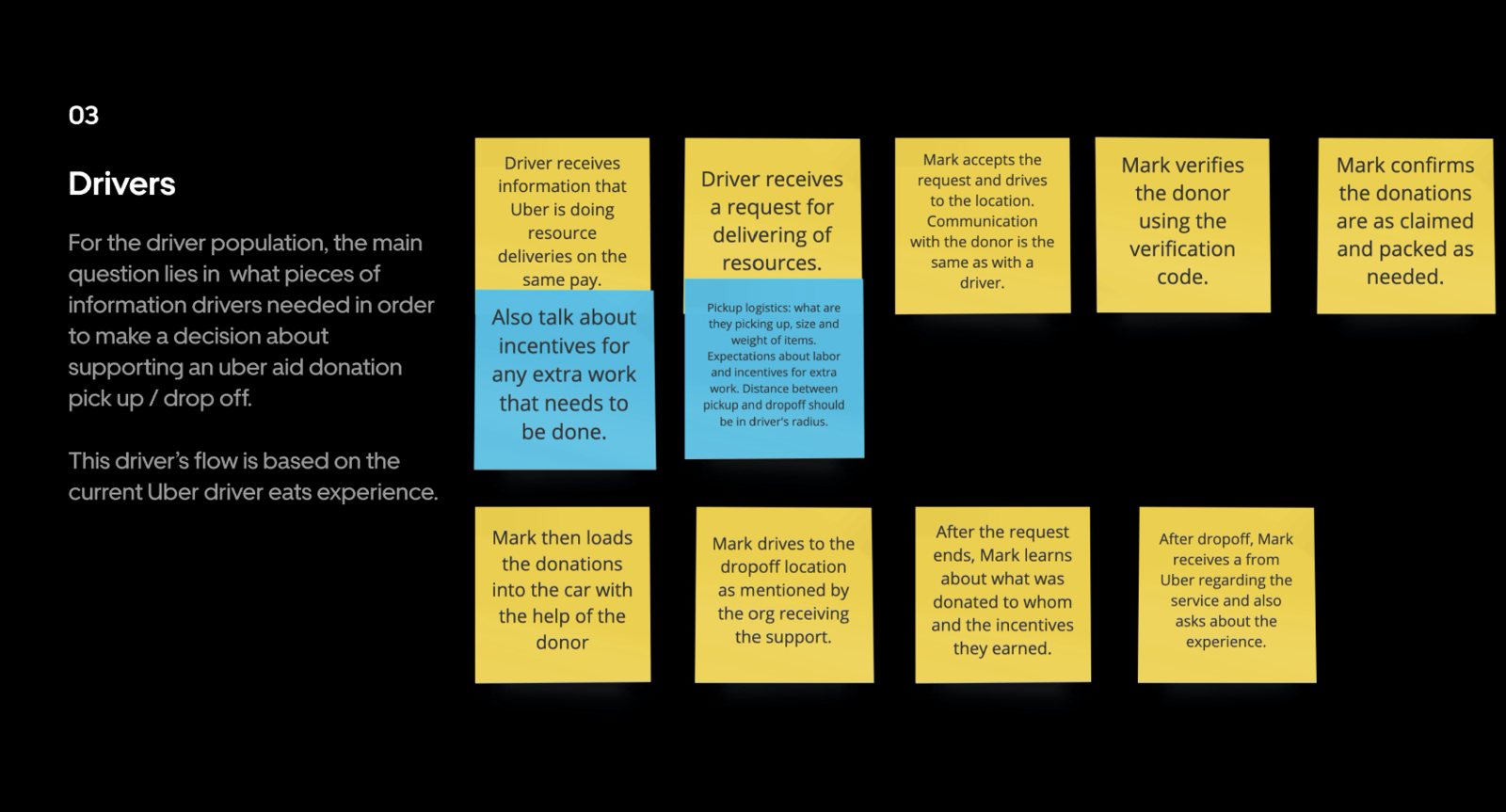
After the organization finds a donation that matches their requirement, the driver will submit an Uber Aid request to collect relief resources from the donor and drop it off at a designated location selected by the other parties.
Competitive analysis
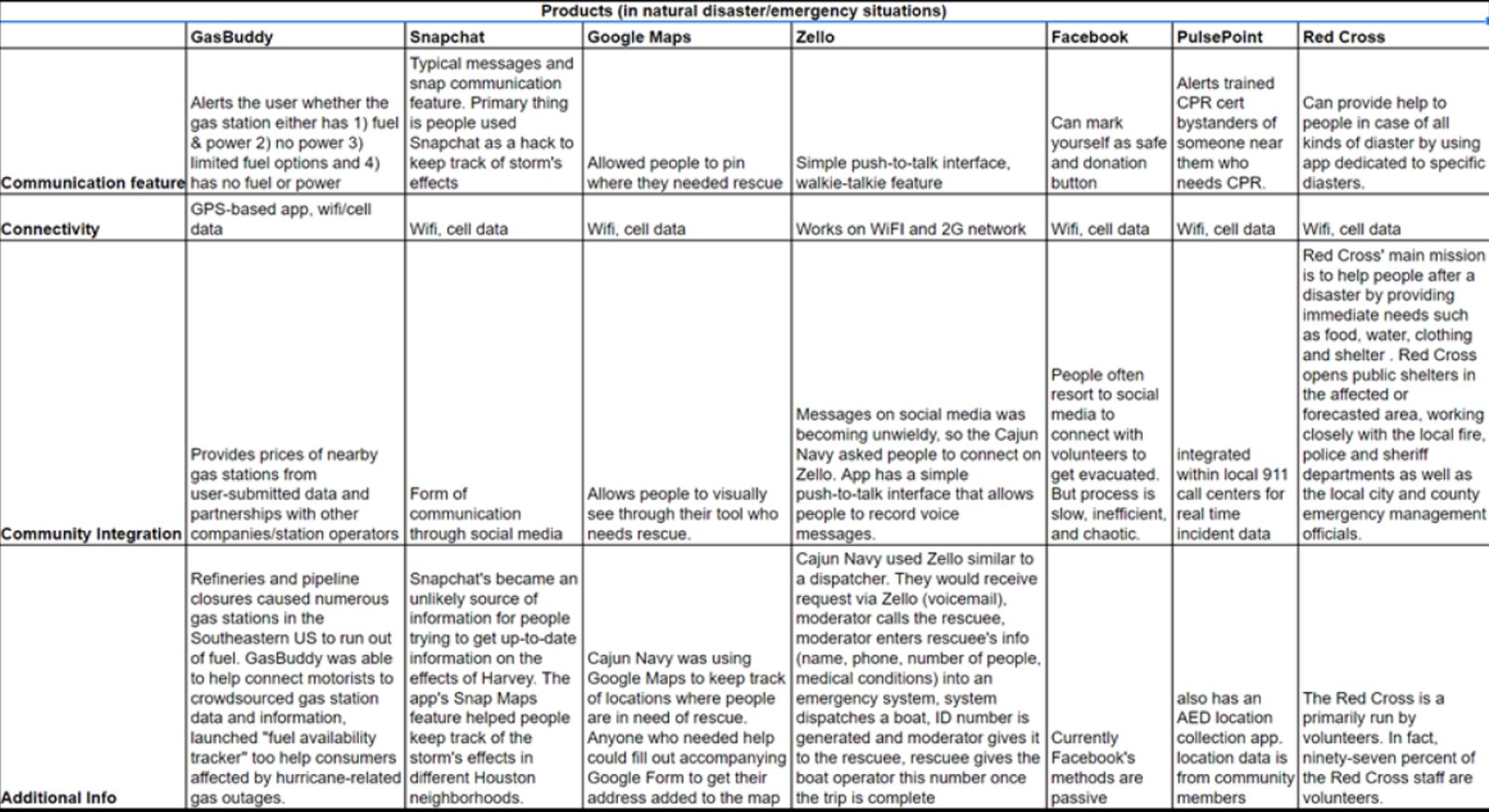
Communication, connectivity, and community integration is pivotal in emergency situations.
Companies and organizations all fell into one of the following categories: an organized group of volunteers or orgs focused on disaster relief, the government, a corporation utilizing their current infrastructure, or a newly formed emergent group wanting to help their community.
Literature review
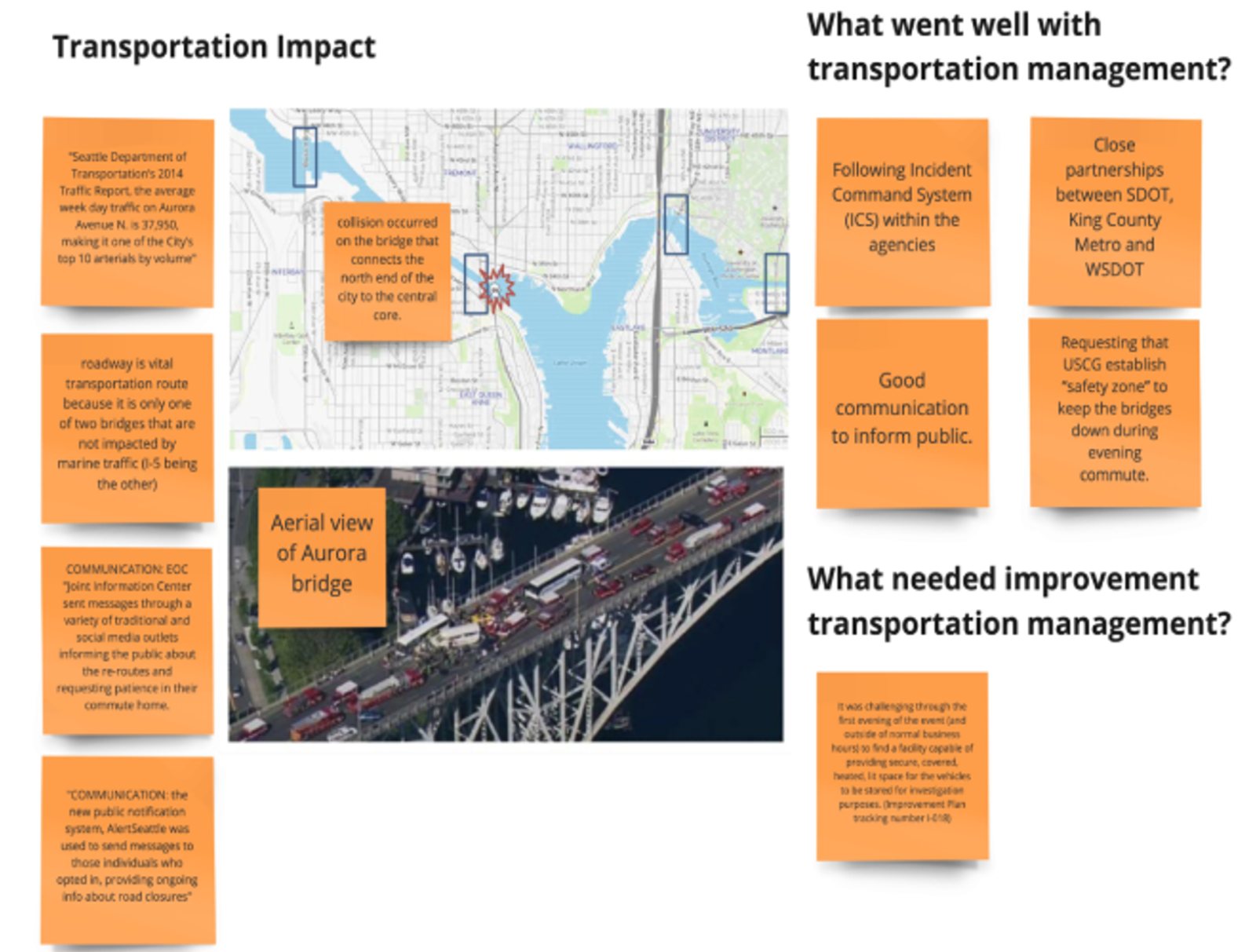
The After Action Report of the Aurora Bridge incident showed that donations were not handled well and was a major area that needed improvement. This finding influenced Uber Aid’s designs.
Dimensional analysis
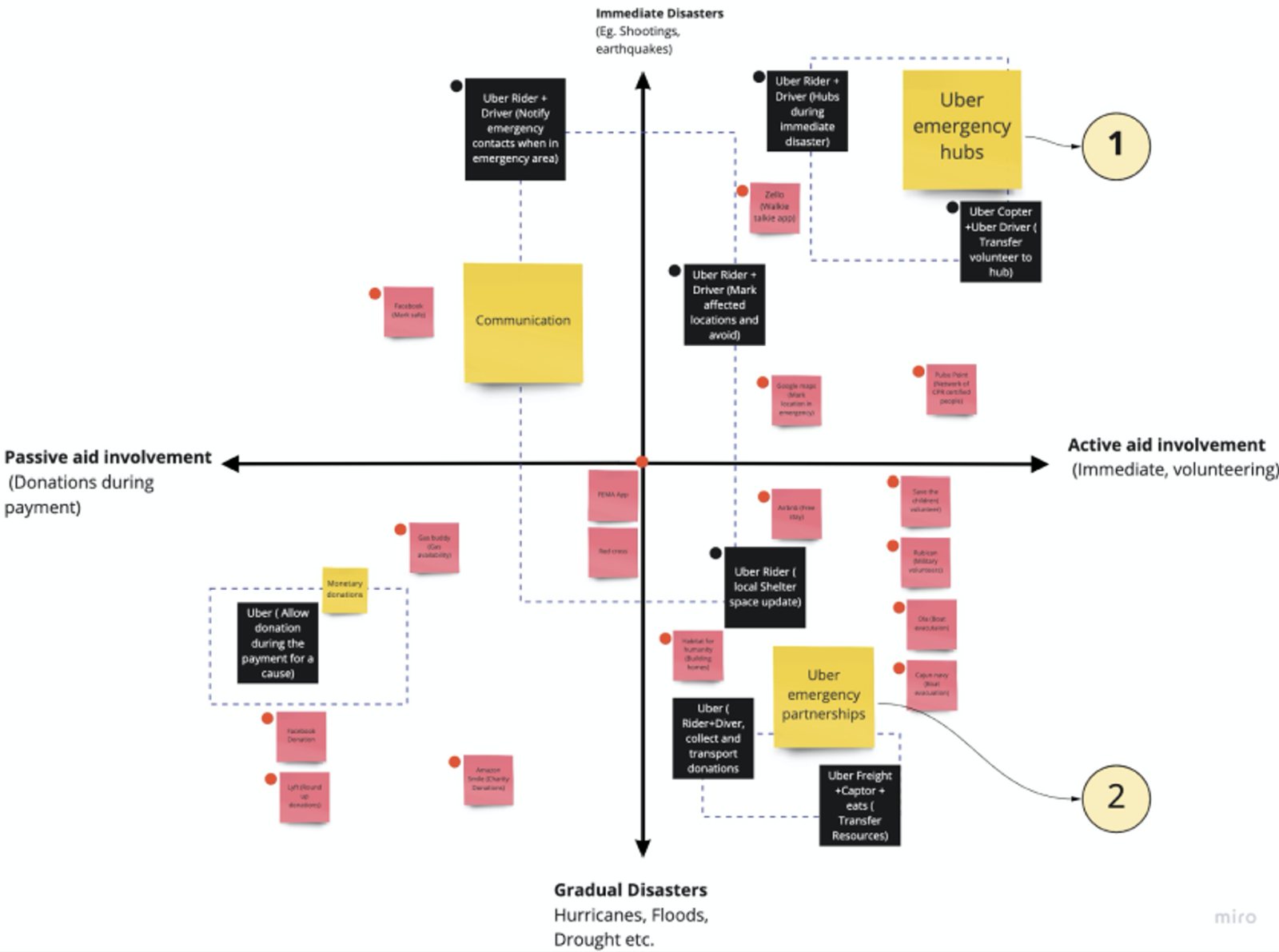
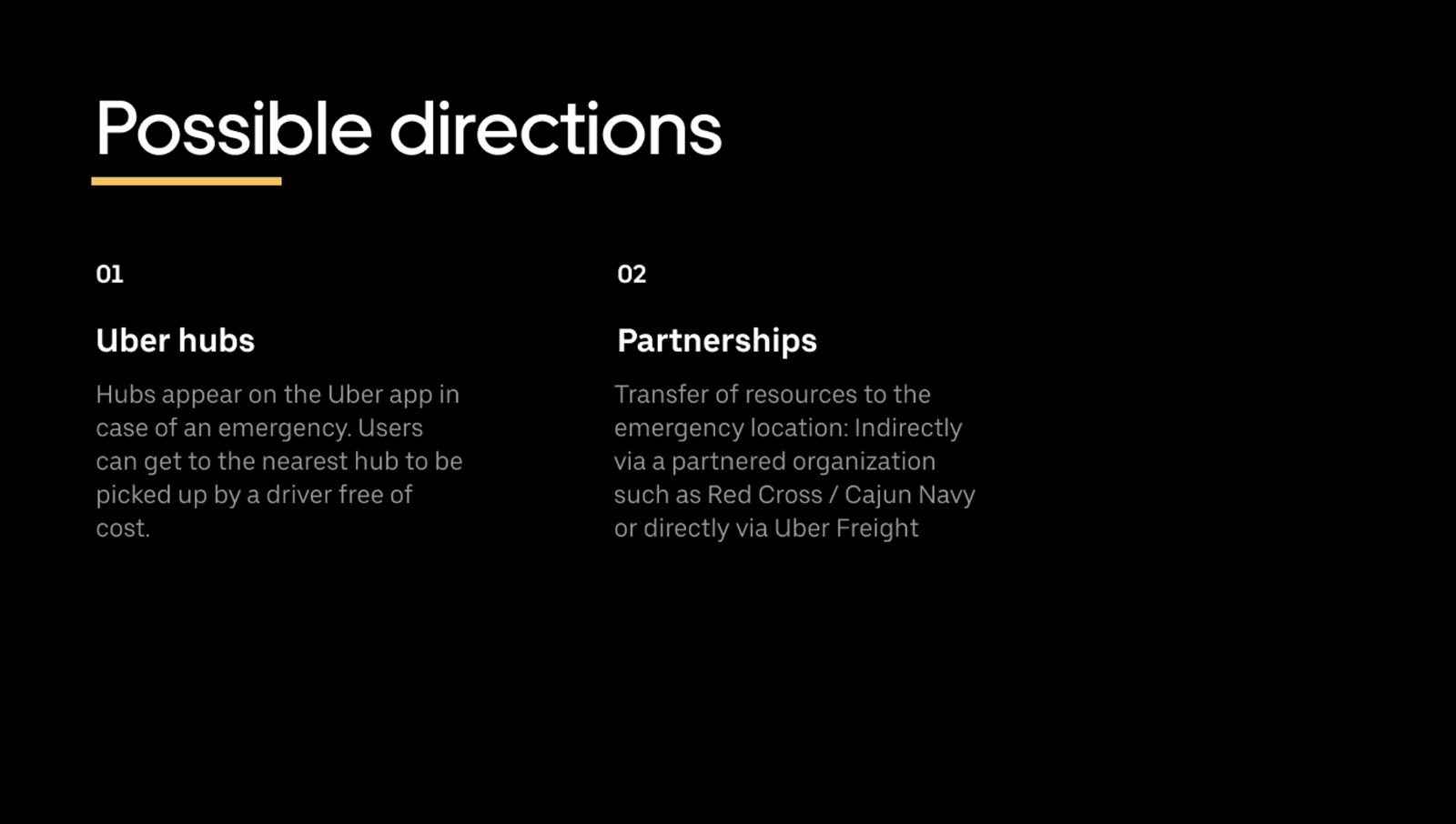
Building on work from competitive analysis, dimensional analysis helped scope and create better understanding of this design space and determine where Uber could fit. Primary focus was on features and products that have supported emergencies in the past. This analysis informed two possible directions: Uber hubs and Uber partnerships.
User flows
Low-fidelity prototypes
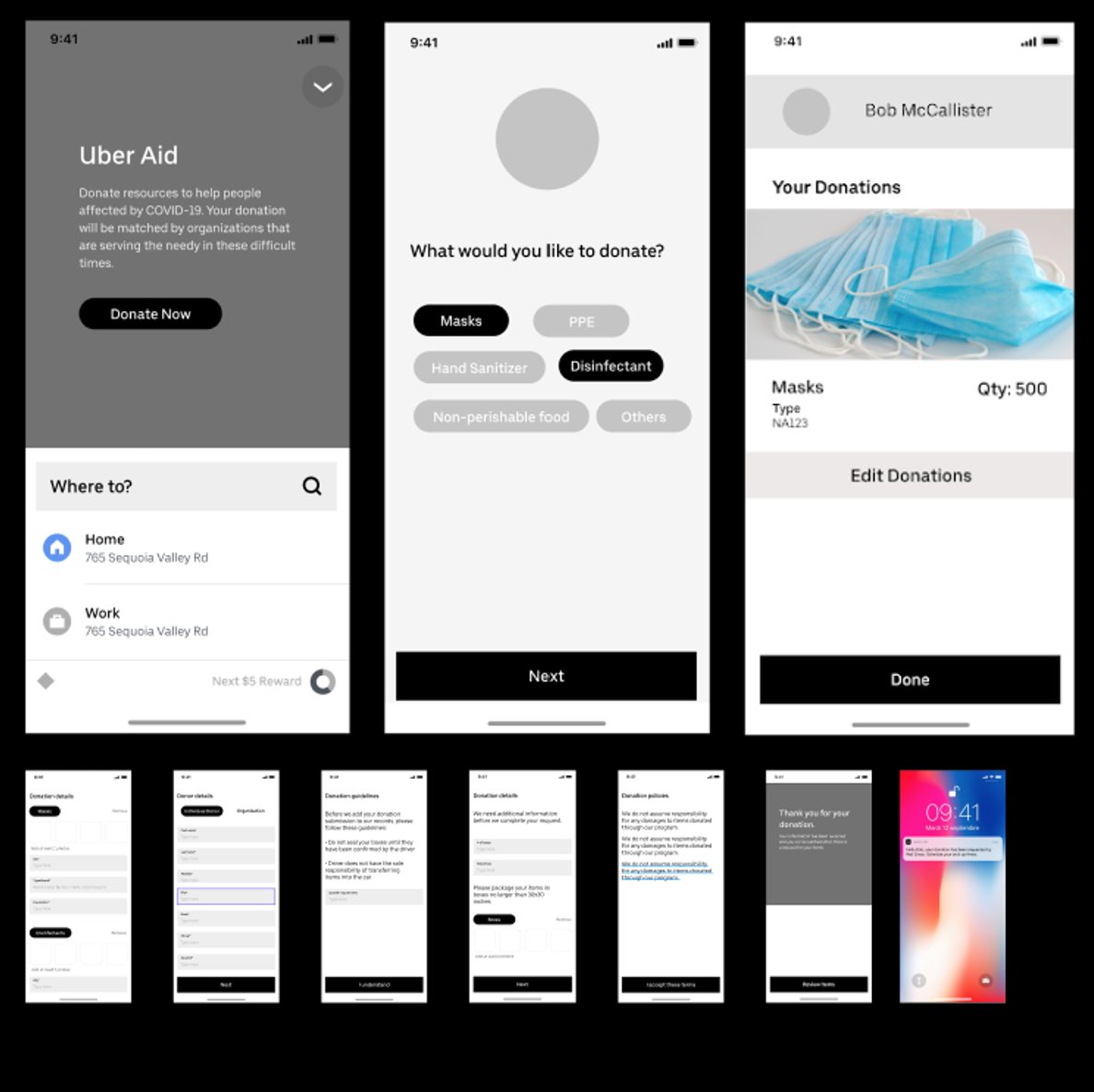
These low-fidelity prototypes were tested with Uber drivers, potential donors, and members of non-profit organizations.
- – Drivers want minimal information when accepting an Uber Aid request, so we prioritized the information shown to them.
- – Participants felt the donor flow was long, so we reduced the number of screens by batching similar actions together.
- – Uber’s design team felt the donor flow should support multiple donations, so we added the ability to create multiple donation requests at once.